
Choose a period and understand the total
Compare the right dates before comparing the numbers.
These guides use fictional practice data and generic EUR amounts. The screenshots show the October 2026 interface. Adapt example dates and planning periods if practicing later. Recording bills and payments does not transfer money.
Start with Create a cost and your first Budget or Handle a variable bill.
Next: Record full, partial and discounted payments.
Dated prices and adaptive expectations
Payments due uses the price effective on each scheduled occurrence. Confirmed variable invoices override forecasts; payments retain their own dates and amounts. Smoothed budget equivalent uses the expected price at each month end, divided by the billing interval. It is a planning comparison, not a promise of cash due that month. With automatic variable estimation enabled, unbilled future forecasts adapt to invoice history. See price changes and automatic estimates.
View another Catalog currency
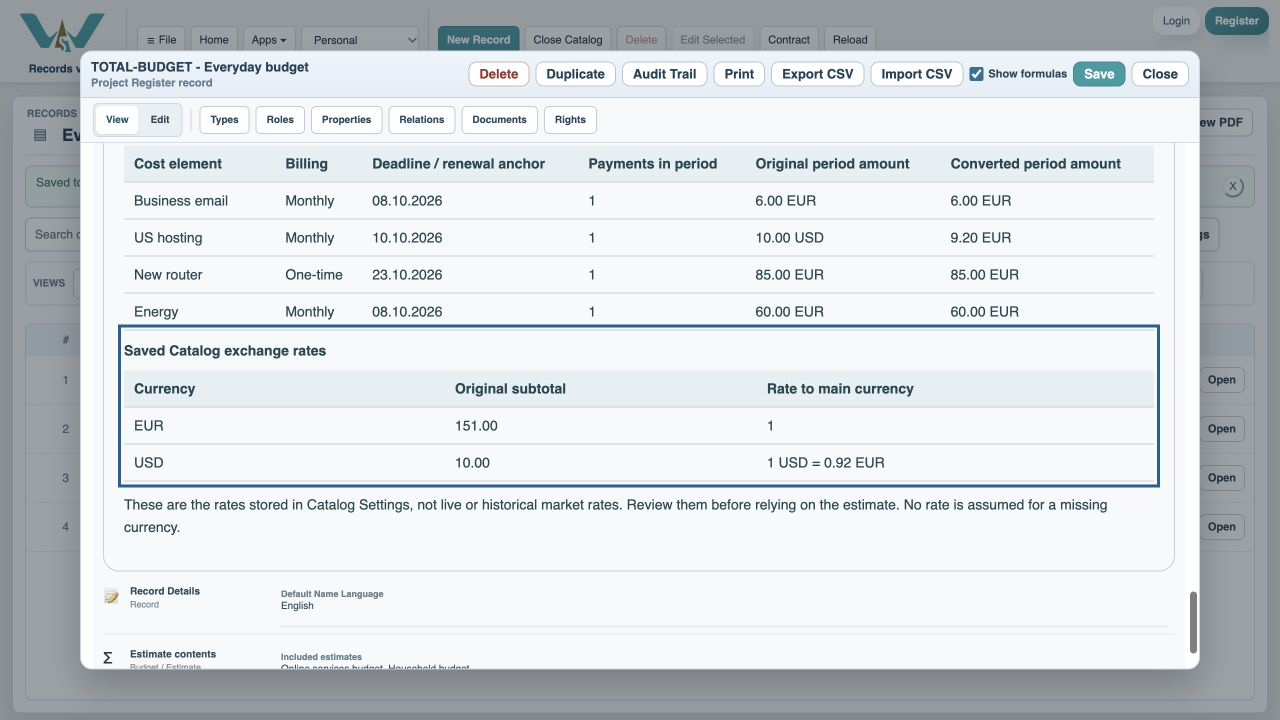
Use Display currency to switch this Budget / Estimate between the currencies allowed in Catalog Settings. The Catalog main currency is the default. Saved exchange rates are used to convert totals, bills, payment balances and charts. This is a viewing choice: original costs, invoices and payments keep their currencies. If a required rate is missing, the report clearly shows an incomplete subtotal instead of assuming an exchange rate.
Including this month means the whole month
The 12-month default starts on the first day of this month and ends on the last day of the eleventh following month. A bill from yesterday is included if its due date falls in that range. This month, Next month, Next 3 months, Until end of year and Next year are calendar periods; inspect the displayed start and end dates. Custom number of months starts with the current month.
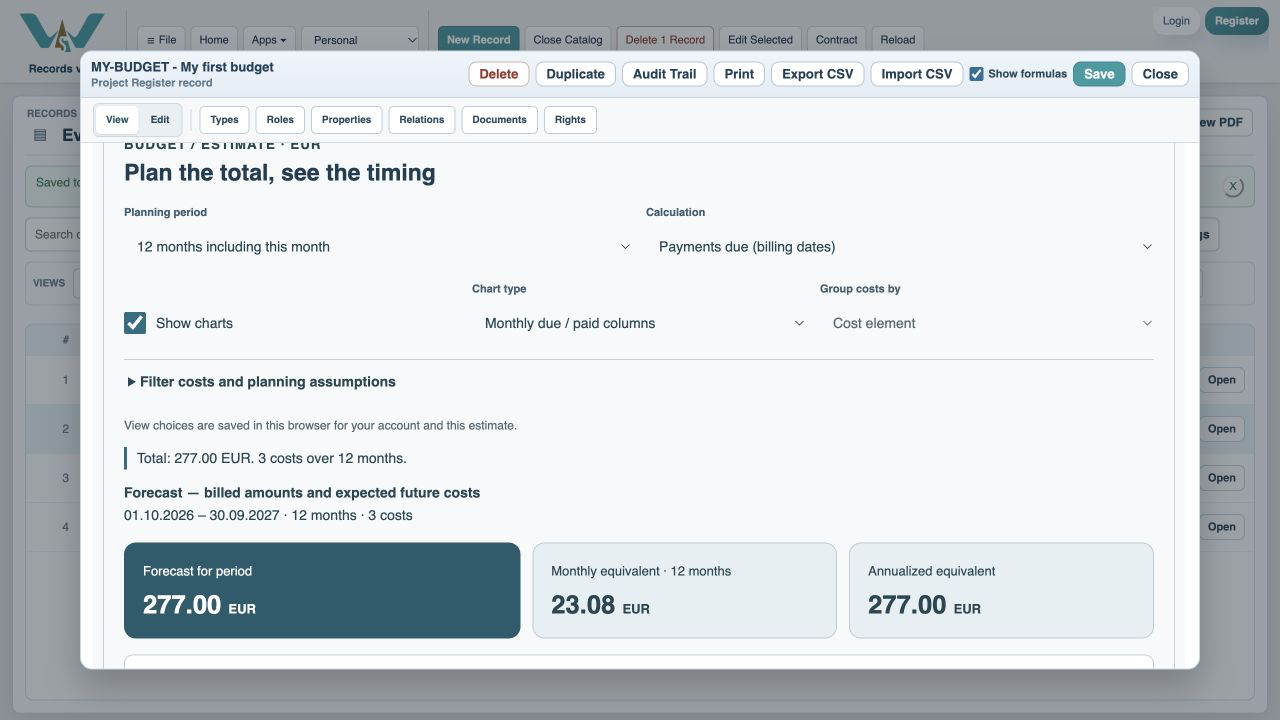
Forecast and expected budget
Payments due uses real bill timing: known fixed prices and entered variable invoices, with expected amounts for variable occurrences that have no invoice yet. Smoothed budget equivalent spreads expected recurring prices across the selected horizon. One-time costs count once. Monthly equivalent is the period total divided by its number of months; annualized equivalent scales that comparison to twelve months.
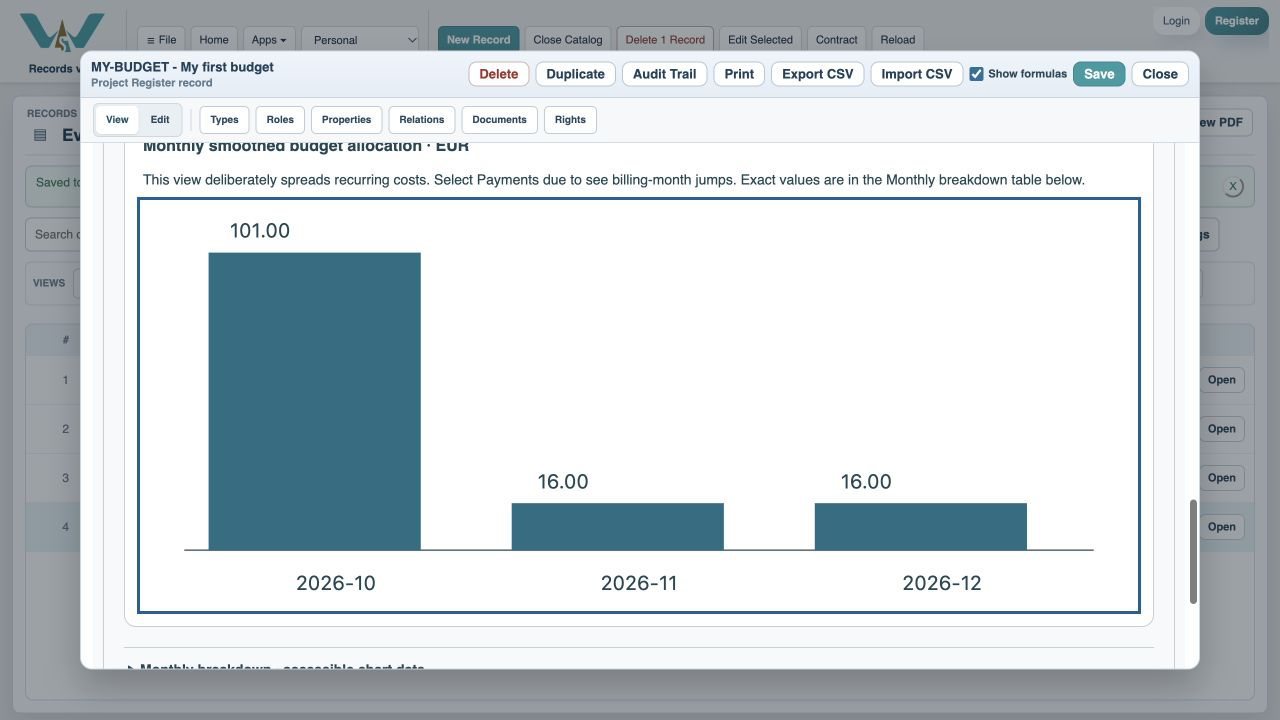
Billed and paid use different dates
Billed totals follow the invoice due date. Actually paid follows the payment date. Paying a November bill in October puts cash in October but keeps the invoice in November. Due to pay includes unpaid confirmed amounts plus remaining variable estimates, matching payments to each bill regardless of payment date. It cannot be calculated reliably by subtracting one chart column from the other.
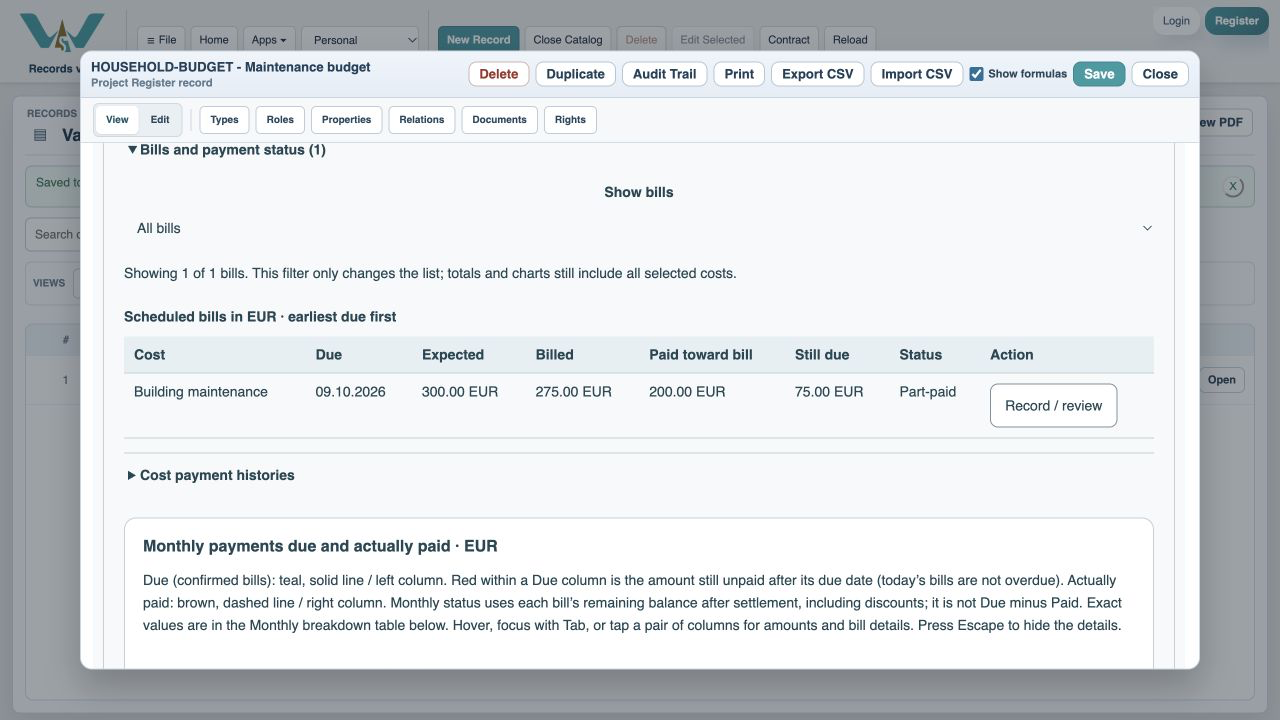
Check exclusions before trusting a subtotal
Undated costs are excluded from billing-date calculations. They can be included as assumptions in smoothed planning. Missing exchange rates, inaccessible records or invalid history produce warnings. Review Included costs and conversion rates, and do not interpret an incomplete converted subtotal as the whole budget.
Enable JavaScript to use reading progress and usefulness ratings.