
Model Coordination and Clash Detection Basics
Explains how BIM coordination works, what clash detection can and cannot do, and how issues should be managed.
Information only — not legal advice.
Model coordination brings discipline information together so that the team can identify conflicts, make decisions and verify the resulting changes. Clash detection is one technique within that process. A list of intersecting objects is not yet a list of design problems, and an empty report is not proof that the design is complete.
The goal is to resolve consequential issues while there is time to act.
Make the inputs comparable
Before running checks, confirm the model revisions, exchange purpose, coordinate system, units, levels and agreed scope. Keep a manifest of the files used. A misplaced model or duplicated reference can generate hundreds of misleading results.
Agree which systems or disciplines are compared, the tolerances and clearance rules, and any intentional exclusions. Record why an exclusion is reasonable and who authorised it. A broad exclusion used merely to reduce the issue count can hide a real problem.
Look beyond physical intersections
Useful checks may include hard clashes, maintenance or access clearances, sequencing conflicts, inconsistent locations and missing information. Some require explicit clearance objects or other representations; the software cannot infer every operational need from visible geometry.
Engineering adequacy, fire safety and statutory compliance need their appropriate reviews. Geometric coordination does not replace them.
Example: a valve that can be installed but not maintained
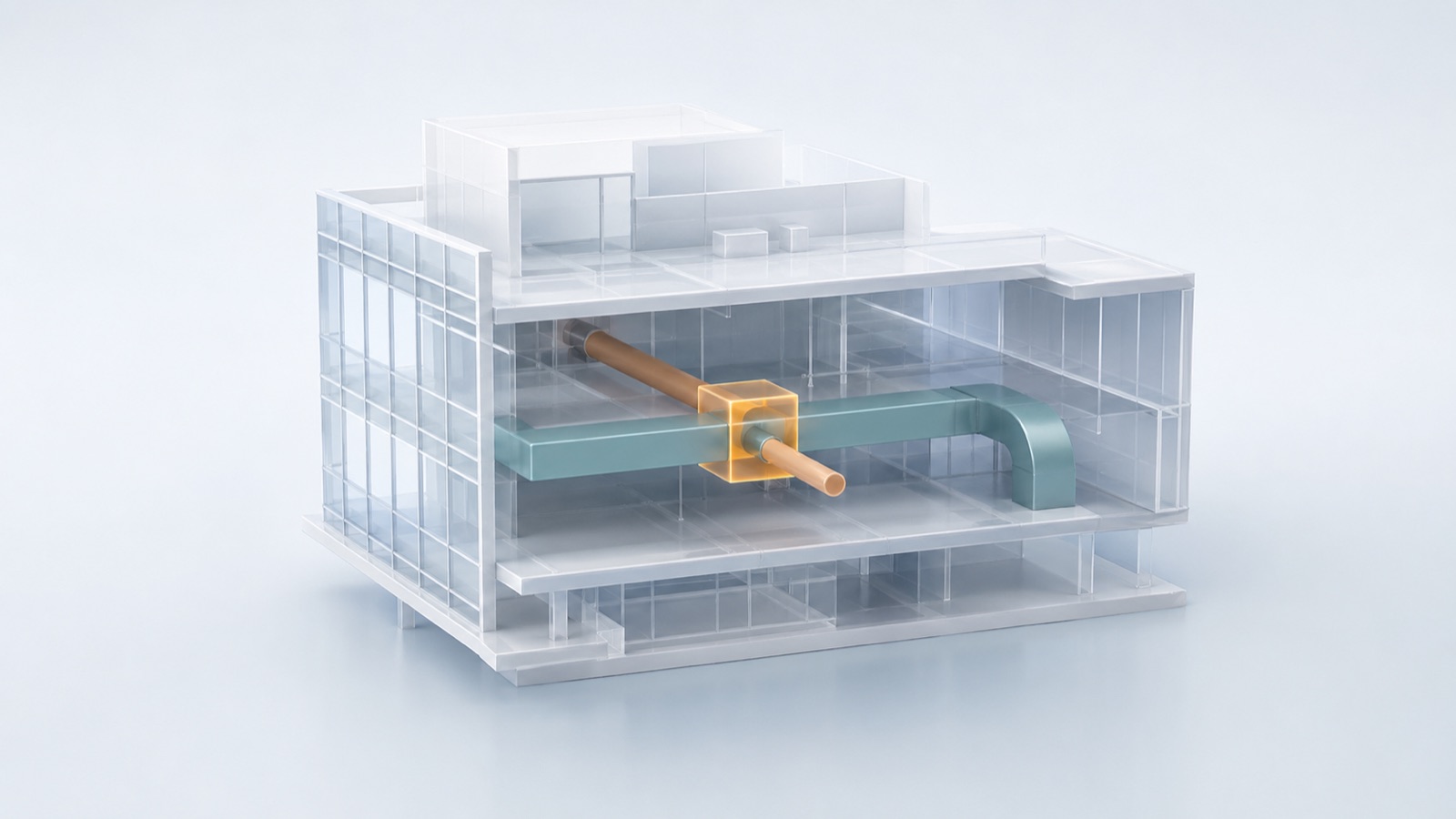
In a fictional plant room, a valve does not intersect any neighbouring pipe. The maintenance team nevertheless needs space to remove its actuator. That space is occupied by a cable tray.
The coordinator records the affected elements, model revisions, viewpoint and required access envelope. The relevant designers assess alternatives and agree a change. After the next exchange, the reviewer checks the revised location and the required clearance, then records closure against the new revisions.
The useful outcome is a maintainable arrangement and a traceable decision, not simply a lower clash count.
Turn findings into actionable issues
Group related findings when they share a cause, but retain enough context to find every affected location. Each issue should have a clear description, responsible owner, due date, priority, status and evidence needed for closure.
Distinguish “author reports fixed” from “reviewer verified.” If the team accepts a residual conflict, record the reason and decision authority instead of deleting the issue from the history.
buildingSMART BCF supports model-based issue exchange, including viewpoints and related information. Agree compatible versions and test the exchange between the actual tools. A screenshot alone may be useful, but it can lose element identity and model context.
Run a repeatable cycle
- Receive and validate the agreed model package.
- Run defined checks and review the results for relevance.
- Assign issues and record decisions with the responsible disciplines.
- Receive corrected information and verify the changes.
- Report unresolved risks and authorise the next issue through the project process.
Track overdue consequential issues, recurring causes and issues reopened after review. A raw count is sensitive to model size, check rules and grouping, so compare like with like.
Define the cycle in the BIM Execution Plan, connect ownership through the responsibility matrix, and keep the exchange history in the common data environment.
Important information
This article provides general information and does not constitute legal advice or replace a qualified professional's assessment of your circumstances. Laws, official guidance, standards and product features can change. Check current primary sources and the requirements applicable to your jurisdiction, contract and project before making decisions. Examples illustrate the discussion; they are not official rulings or instructions for a particular case. For legal decisions, consult a qualified lawyer; for technical or other specialist matters, consult the responsible professional.
Enable JavaScript to use reading progress and usefulness ratings.