
What Is a Common Data Environment?
How controlled sharing works: information states, revisions, responsibilities and a worked drawing-review example.
Information only — not legal advice.
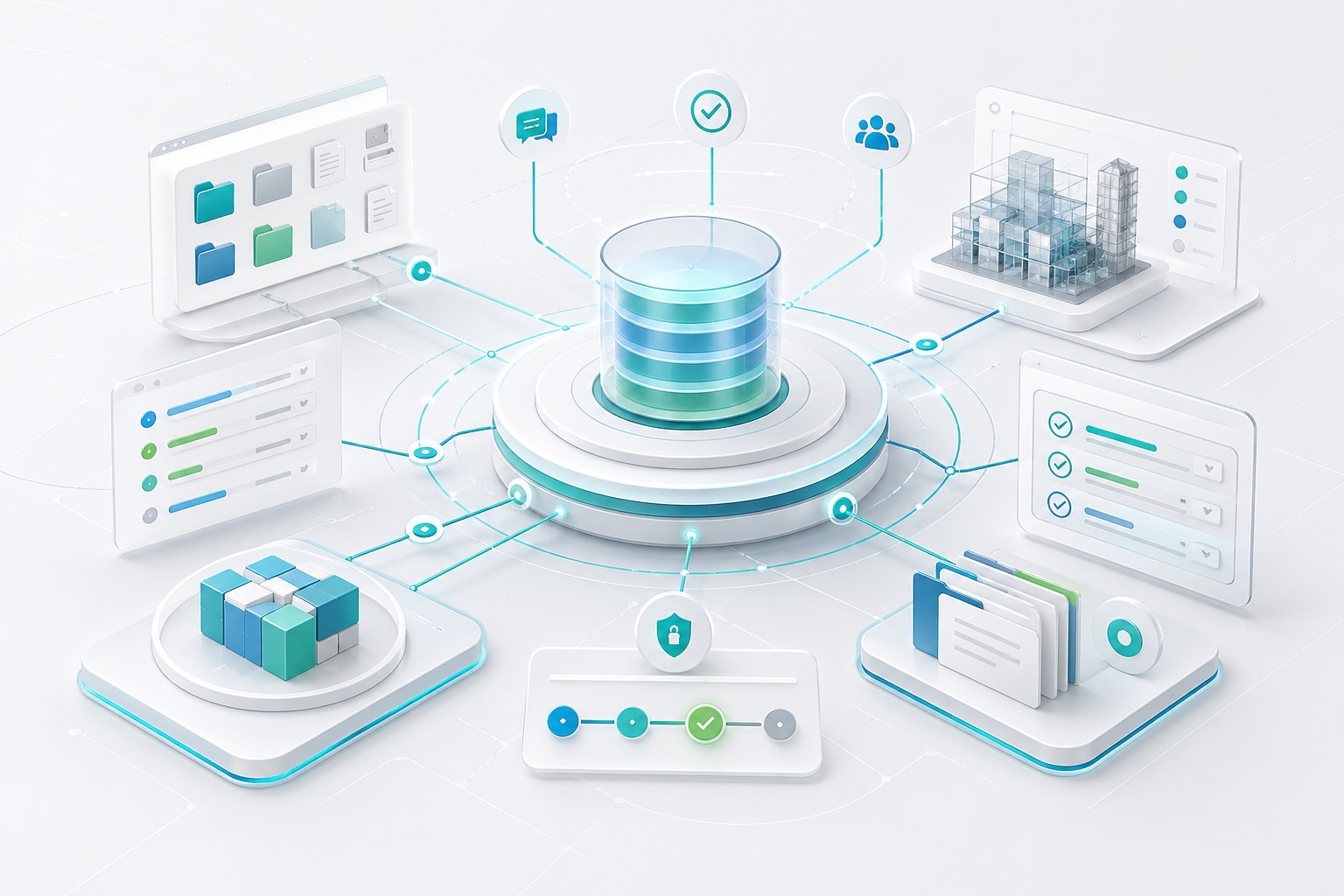
A common data environment (CDE) combines an agreed information-management workflow with the technical systems used to support it. It helps project participants understand which information they may use, for what purpose and at which revision. The term is widely used in construction and BIM.
The workflow can span more than one system. Simply storing everything in one location does not establish review responsibilities or approval rules. The UK BIM Framework's CDE guidance explains this distinction between workflow and technical solutions.
Four information states
- Work in progress: the originating team develops and checks information within its working area.
- Shared: information is made available for an agreed purpose, such as coordination. Shared information is not automatically authorized for construction.
- Published: authorized information is available for its stated use, following the agreed review and acceptance process.
- Archive: the history of information transactions and previous states is retained to support traceability.
These states describe information handling. A record's suitability or status, revision and permitted use still matter. Do not interpret a green icon or a folder name as permission to act.
A worked example: moving a doorway
Fictional example, with project-specific identifiers rather than prescribed standard codes.
- The designer prepares drawing
D-014, revisionR02, in the working area. A checker confirms dimensions and the designer records the check. - The drawing is shared for coordination. The mechanical engineer identifies a clash with a duct. The contractor must not treat this coordination issue as an instruction to build.
- The designer resolves the comment and creates revision
R03. The review record links the comment, response and revised drawing. - The person authorized under the project arrangements accepts the drawing for the specified use. The issued copy records the revision, purpose, issue date and recipients.
- The earlier issue remains retrievable as superseded history. People opening the current drawing can see that
R03is the applicable issue.
If a late change is proposed, start a further controlled revision. Do not quietly replace the bytes of the already-issued R03 file.
Decide these rules before exchanging files
- Identity: how are documents, models and other information containers identified?
- Ownership: who prepares, checks, authorizes and accepts each deliverable?
- Purpose: what may recipients do with each issue?
- Revision: how are changes distinguished, compared and withdrawn?
- Access: which parties may view or change each state?
- Evidence: where are comments, responses, issue records and acceptance decisions kept?
- Closeout: how will the owner retrieve the information and its history after the project?
A completion percentage describes progress. It does not establish that the contents have been checked, accepted or issued.
A useful acceptance test
Give a reviewer a sample drawing and ask them to identify its originator, current revision, issue purpose, outstanding comments and authorization evidence. Then ask a recipient to find the superseded issue without mistaking it for the current one. Test external access separately from internal access.
Where standards fit
ISO 19650-1 provides information-management concepts for built assets. A project must still agree its information requirements and contractual arrangements. This introductory article is not a complete implementation of the standard or a statement of conformity.
Related reading: Digital Workspaces, Project Workspace Setup and COBie and Structured Handover Data.
Important information
This article provides general information and does not constitute legal advice or replace a qualified professional's assessment of your circumstances. Laws, official guidance, standards and product features can change. Check current primary sources and the requirements applicable to your jurisdiction, contract and project before making decisions. Examples illustrate the discussion; they are not official rulings or instructions for a particular case. For legal decisions, consult a qualified lawyer; for technical or other specialist matters, consult the responsible professional.
Enable JavaScript to use reading progress and usefulness ratings.