
Collaboration Platform Security Checklist
A vendor-neutral checklist for evaluating access, records, auditability, backups, exports, and operational fit.
Information only — not legal advice.
Choosing a collaboration platform is a decision about how work, information and responsibility will be managed. A long feature list is less useful than evidence that the service can support your actual workflow at an acceptable risk.
Begin with a small representative scenario: invite a contractor, issue a revised document, remove access, export the project and recover an accidentally deleted record. Use fictional test information. These questions evaluate products; they do not assert that WorkStudio or any other service provides every listed capability.
Ask for evidence in five areas
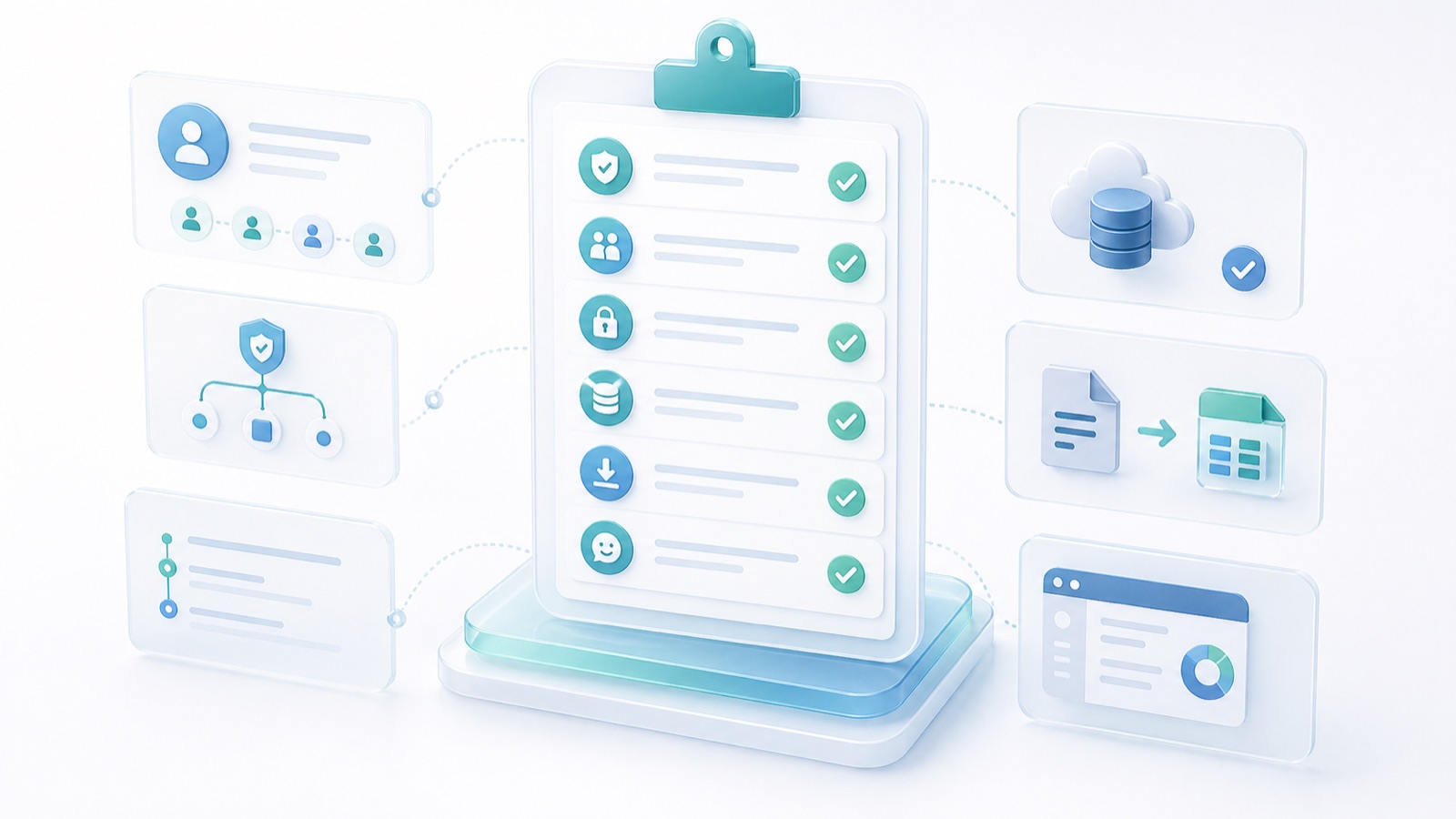
Identity and access: Can people use named accounts? Which MFA and recovery methods exist? How are administrators protected? Can access be limited to the intended project or record? How quickly can sessions and access be revoked?
Information control: How are revisions, approvals and deleted items handled? Does an export include attachments, relationships, permissions and history, or only current file content? Can you identify the exact material approved on a given date?
Operations and recovery: What availability and support commitments are contractual? What does the provider back up, what can the customer restore, and when was restoration last tested? A status page or service credit is not a recovery plan.
Data handling: Which parties process the data, in which locations and for which purposes? What changes when AI features or integrations are enabled? Examine the relevant terms, processing agreement and retention/deletion explanations with the appropriate adviser.
Exit and usability: Can a different tool read a realistic export? Can people complete essential tasks by keyboard and at high zoom? Are key documents and controls accessible to the intended users? A secure workflow that staff cannot use tends to create uncontrolled workarounds.
Turn claims into a small pilot
Ask the supplier to demonstrate the critical controls using your scenario. Keep the requirement, evidence, date, service tier, limitations and decision together. If a feature is on a roadmap or only available in another plan, record that distinction.
For an access test, use authorized test accounts with different roles. For an export test, check several linked records and attachments, then open them independently. For recovery, restore a deliberately created test record through the supported procedure and measure the result. Do not confuse seeing a Backup label with observing a restore.
Use a decision rule, not a decorative score
Separate mandatory conditions from preferences. A product that fails a mandatory confidentiality or accessibility need should not win merely because it has many attractive extras. For preferences, agree weights before the demo and explain what each score means.
Fictional example: a team compares a lower subscription price with a higher-priced service that includes a tested export workflow. Include migration, administration, training, support and exit effort in the comparison. Label cost estimates and time savings as assumptions until they have been measured.
NIST’s cloud computing synopsis and recommendations offer background for evaluating cloud arrangements. Continue with business continuity, data ownership and supplier management.
Important information
This article provides general information and does not constitute legal advice or replace a qualified professional's assessment of your circumstances. Laws, official guidance, standards and product features can change. Check current primary sources and the requirements applicable to your jurisdiction, contract and project before making decisions. Examples illustrate the discussion; they are not official rulings or instructions for a particular case. For legal decisions, consult a qualified lawyer; for technical or other specialist matters, consult the responsible professional.
Enable JavaScript to use reading progress and usefulness ratings.