
Incident Management and Corrective Actions
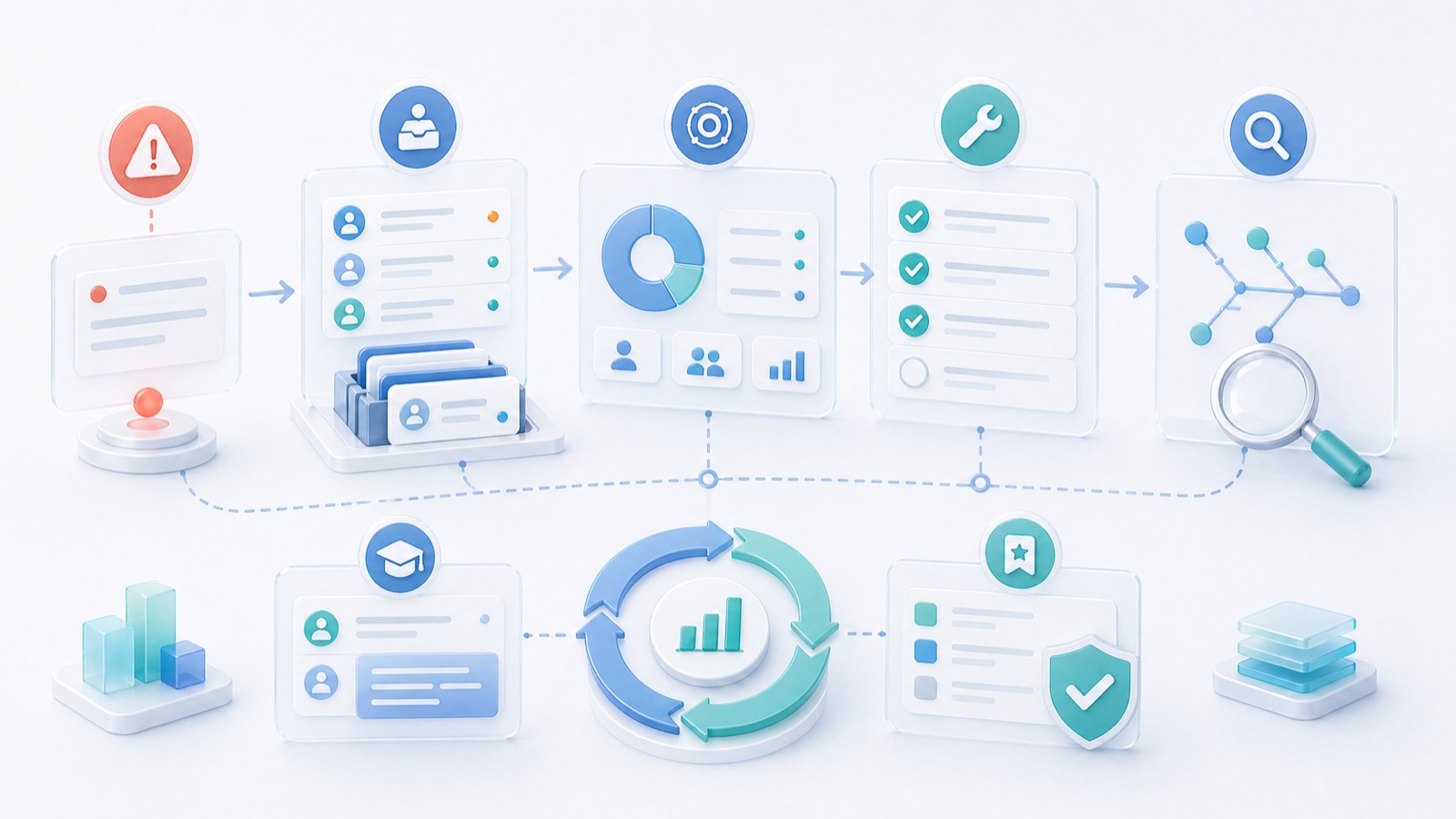
A cross-field pattern for recording incidents, triaging impact, assigning actions, and learning from what happened.
Information only — not legal advice.
Incident management restores safe, dependable work after something goes wrong. Corrective action addresses the causes that made the failure possible. Keeping these activities connected helps a team respond quickly without repeatedly treating the same symptom.
An incident may involve an outage, wrong document release, unauthorised access, missing records or an operational failure. Its priority should reflect impact and urgency, not how loudly it is reported.
Establish control first
Assign an incident lead and record what is known, what remains uncertain, affected services or information, current impact and the next update time. Use one shared timeline so that handovers do not depend on memory.
Where safe and within the responder's authority, limit further harm. Preserve relevant evidence before actions that might destroy it. Security incidents, safety events and personal-data breaches may require specialist handling and external notifications; the applicable duties and deadlines depend on the circumstances.
Do not delay necessary containment merely to complete a form. Capture essential decisions as the response proceeds.
Example: an outdated drawing reaches a contractor
A fictional project team discovers that revision 2 was sent after revision 3 had been authorised. The first tasks are to identify recipients, establish whether work relied on the old revision and arrange a clear withdrawal and replacement through the authorised project process.
The team preserves the issue record, messages and relevant system events. It avoids assuming that a recorded download proves the recipient used the drawing. The responsible technical people assess any effect on work already performed.
Once the immediate risk is controlled, the team examines how the release happened: Was the status unclear? Did the link open an uncontrolled copy? Could the sender distinguish the approved issue package? Was responsibility for release missing?
Separate correction from corrective action
Sending revision 3 is a correction. Introducing a controlled release location and testing that issuers can identify the authorised package may be corrective action. Training can help, but “be more careful” is rarely a sufficient explanation or remedy on its own.
For each action, record the cause it addresses, owner, due date and evidence needed to judge effectiveness. Validate causes against evidence; an incident can have several contributing conditions rather than one convenient culprit.
Know when to close
Close the immediate incident when service or work is acceptably restored, affected parties have the necessary information and remaining risks have a responsible owner. Longer-term corrective actions can remain open in a linked register.
Check effectiveness after enough real work has occurred. For the drawing example, sample subsequent releases and ask recipients to identify the current authorised revision. Counting completed training sessions would not establish that the release problem is fixed.
Keep communication useful
Updates should say what is affected, what people should do, what has changed and when the next update will arrive. Separate confirmed facts from hypotheses. Retain sensitive technical evidence in an appropriately restricted location.
NIST SP 800-61 Rev. 3 connects cybersecurity incident response with wider risk management. The drawing example extends the same practical distinction between response and improvement to project work. See audit logs and change management.
Important information
This article provides general information and does not constitute legal advice or replace a qualified professional's assessment of your circumstances. Laws, official guidance, standards and product features can change. Check current primary sources and the requirements applicable to your jurisdiction, contract and project before making decisions. Examples illustrate the discussion; they are not official rulings or instructions for a particular case. For legal decisions, consult a qualified lawyer; for technical or other specialist matters, consult the responsible professional.
Enable JavaScript to use reading progress and usefulness ratings.